Key Takeaways
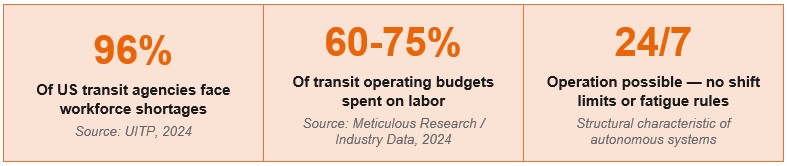
- 96% of US transit agencies face workforce shortages — self-driving buses directly address this structural gap (UITP, 2024).
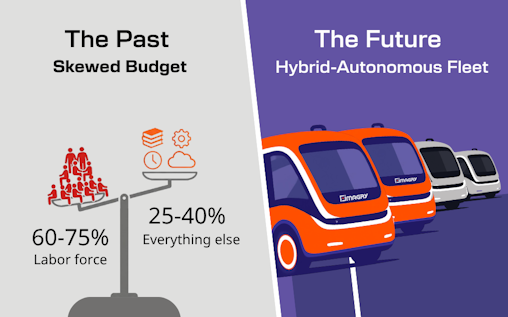
- Labor accounts for 60-75% of public transit operating budgets; automation stabilizes the single largest cost line.
- Autonomous vehicles operate 22/7 with no shift limits, fatigue rules, or overtime costs — enabling service coverage that is unviable with human drivers.
- NHTSA attributes ~94% of serious crashes to human error; removing that variable reduces accidents, insurance costs, and operator liability.
- Scaling an autonomous fleet is a capital and logistics decision — not a recruitment challenge — removing the bottleneck that prevents operators from meeting growing demand.
Chronic driver shortages and rising labor costs are squeezing transit operators worldwide. Autonomous public transit directly addresses the structural cost pressures that have made expanding — or even maintaining — service increasingly difficult. For operators, the technology is not just about efficiency. It is about surviving and growing in an environment where the traditional operating model is no longer sustainable.
How Does Autonomous Transit Address the Global Driver Shortage?
96% of American transit agencies report workforce shortages, according to UITP 2024. The problem is not isolated to the US: in the EU, the average bus driver age is 47 and one-third of drivers are over 55. The IRU projects driver shortages will grow 15–40% across various regions in the coming years. Driver recruitment is not just a cost — it is the single largest bottleneck to expanding service.
Self-driving buses directly address this structural gap. By reducing dependency on a shrinking driver workforce, operators can plan service expansion based on demand and capital availability rather than on whether qualified drivers can be found and retained.
Sources: UITP 2024; IRU Global Driver Shortage Report 2024